
Amazon Sustainability: Protecting Salmon in the Dungeness River
Working in collaboration with Amazon’s Sustainability organization, our internal video team captured the story of how Amazon is contributing to the protection of the Dungeness River—one of the Puget Sound’s most productive salmon habitats. Read the full story on Amazon’s blog
Role: Head of Production, Cam Op, Editor
The Brief
Shortly after our Creative Services Team expanded beyond Operations to support Amazon's broader Communications organization, we were entrusted with our first cross-functional assignment: producing a sustainability film documenting Amazon's efforts to help protect the Dungeness River, one of Puget Sound's most productive salmon habitats. More than a single video, the project served as a proof of concept. The goal was to demonstrate that our internal team could deliver the same caliber of documentary filmmaking as an external production company—while reducing production costs and establishing a new model for future communications projects.
The Challenge
Our credibility was on the line. As our team's first project supporting the broader Communications organization, the success of this production would help determine whether our expanded scope continued to receive support from senior leaders. Compounding the pressure, Amazon's Chief Sustainability Officer would only be available on location for a single day, leaving no opportunity for reshoots or pickups. That meant the story had to be built before she ever stepped on set, requiring us to capture five supporting interviews and identify the film's narrative direction before filming with our most time-constrained participant.
The Approach
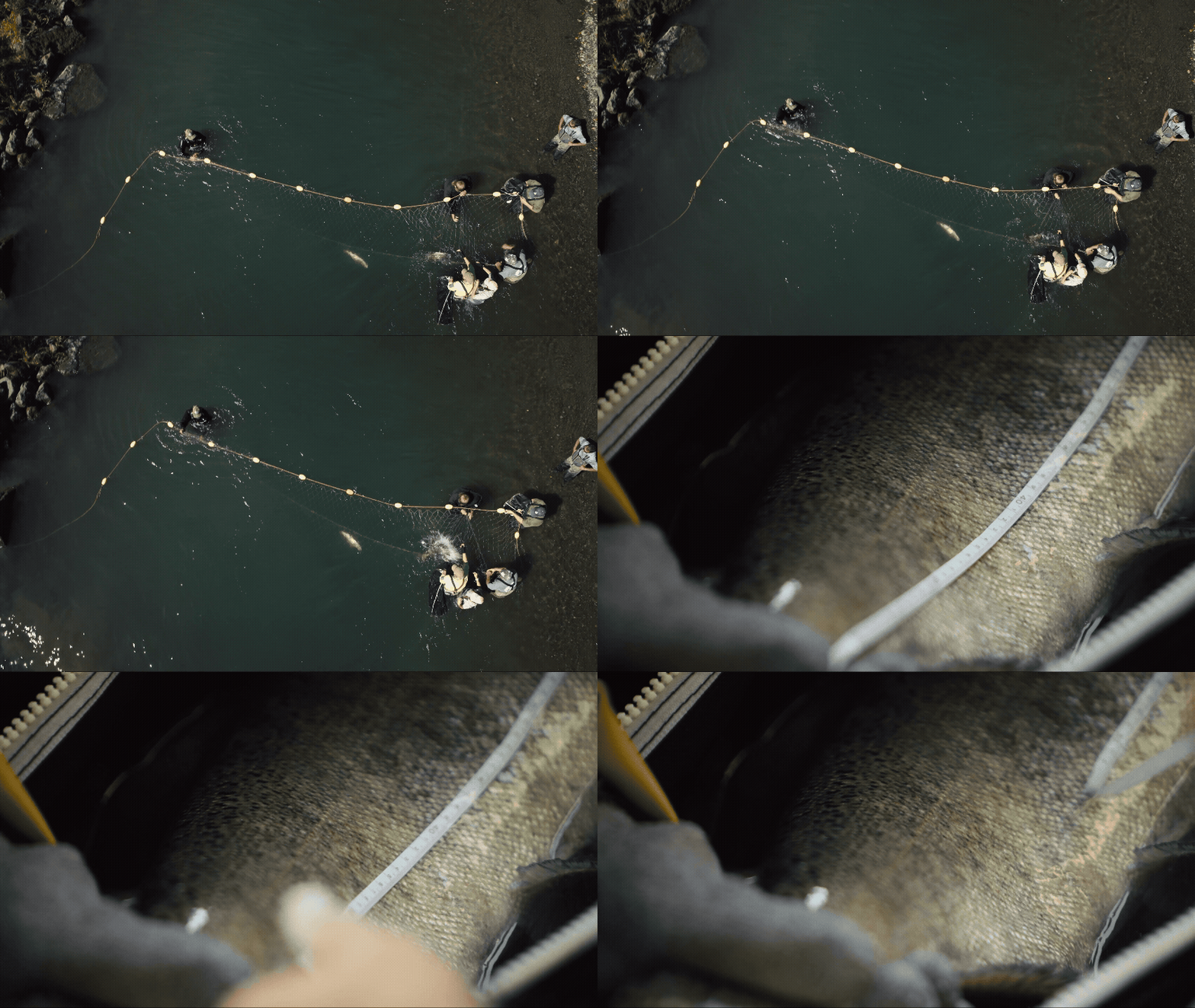
Our team combined in-house support (myself and my direct report) with a small freelance crew providing additional support. Day one focused on documenting members of the local tribe tagging salmon and capturing five supporting interviews across the Olympic Peninsula, allowing us to establish the film's narrative before filming with Amazon's Chief Sustainability Officer on day two. To further reduce costs, I also led post-production, guiding the film through multiple rounds of stakeholder feedback while navigating the additional complexity of creating external-facing content featuring a senior Amazon executive.
The Results
The project demonstrated that our internal team could deliver work traditionally entrusted to vendors while supporting a broader cross-functional communications strategy. Its execution was recognized as a "What's Working" highlight during the following Monthly Business Review, reinforcing leadership's confidence in our expanded remit. The film became a tangible proof point that our team could successfully support organizations beyond Operations without sacrificing production quality or increasing costs. More importantly, the scope expansion has remained in place, establishing a new model for how our OIC supports communications initiatives across Amazon.


-
Production
- Director: Esai Cruz
- Head of Production: Josh Foisey
- Camera Operators: Jordan Myers, Josh Foisey, Esai Cruz
- Drone Operator: Jordan Myers
- Gaffer: Nate Watters
- Sound: Chuck Craft
Post
- Edit: Josh Foisey
- Color: Rob Bessette
- Mix: Ross Smith


